Coding & app development
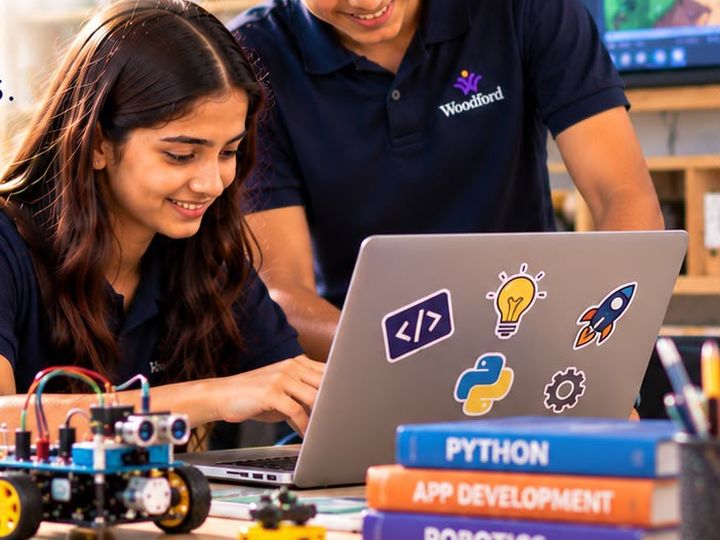
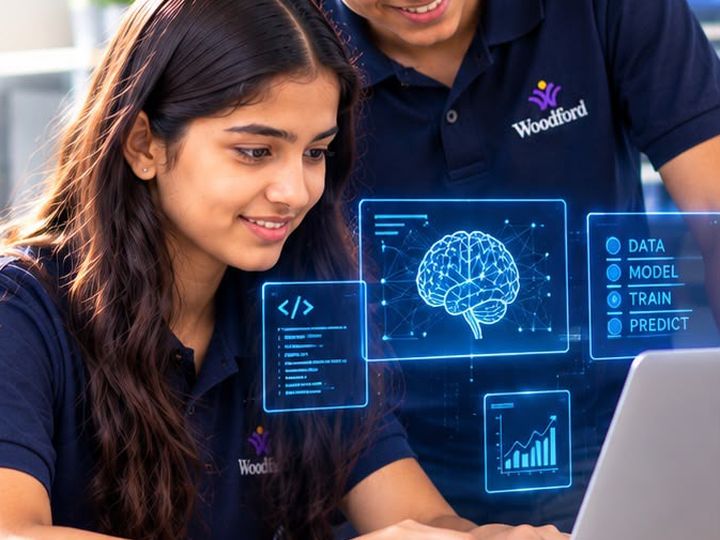
From block coding and simple robots in the early grades to real programming and building small apps that solve problems children care about.
- Real-world programming
- Build apps
- Problem-solving with tech
- Team projects
Home · Curriculum
CurriculumWoodford follows an internationally benchmarked framework, adapted the Finnish way. Children build strong skills in language, mathematics and science, and apply them through projects, making, the arts and time outdoors.
Play-based early years on the same campus, where routines, language and social skills take root.
Open nowReading, writing, number and inquiry, with signature programmes woven into the week.
Admissions 2027–28Deeper subject learning, independent projects and growing responsibility.
Recognised Std 1–8Woodford grows year by year towards Grade 10, with the board pathway shared as it is confirmed.
ComingTaught through themes and projects, so subjects connect to each other and to real life.
Phonics, reading for pleasure, writing for real audiences, speaking with confidence.
Number sense first, with hands-on materials, puzzles and everyday problem-solving before formal methods.
Observe, question, predict and test, in the lab, the garden and the hydroponics beds.
Our city, our country and our planet: geography, history, communities and sustainability.
Gujarati and Hindi alongside English, and a world language introduced from Grade 3.
Emotions, friendships, healthy habits, safety and responsibility, taught explicitly and practised daily.
Drawing, painting, music, movement, and Gujarat's folk and textile traditions.
Daily movement, sport and swimming in the on-campus pool through Aqua Cubs.
Coding, AI, AR/VR, 3D printing and the maker lab, used to create and solve problems.
Every Woodford child takes part. These programmes are part of the school week, and they grow with the child: what begins as play in Grade 1 becomes real projects by Grade 5.
Use technology to create, not just consume.

From block coding and simple robots in the early grades to real programming and building small apps that solve problems children care about.

A child-safe introduction to how AI works: collecting data, training simple models and asking what makes technology fair and useful.

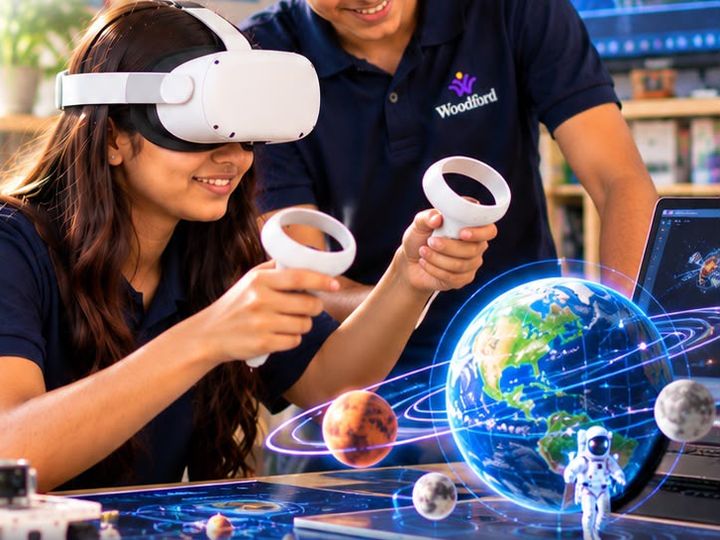
Step inside the solar system, a volcano or a human cell. Immersive lessons make hard ideas visible, and children learn to tell their own stories in 3D.

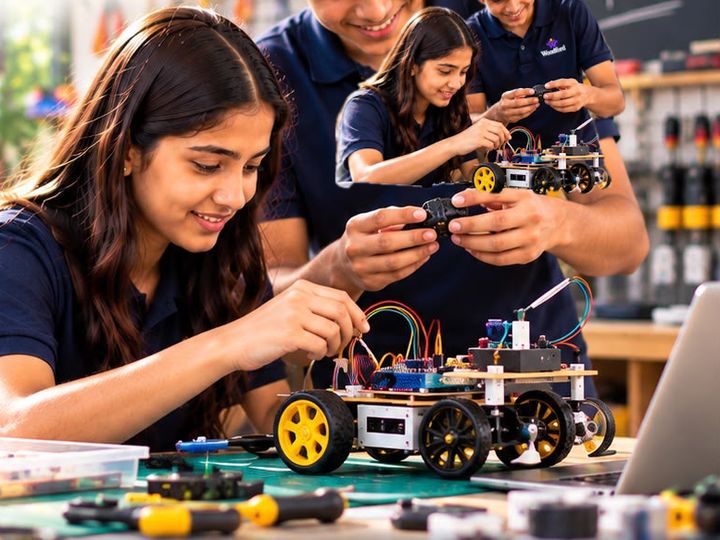
Design thinking in action: children sketch, build, test and improve, working with simple circuits, motors and moving parts.

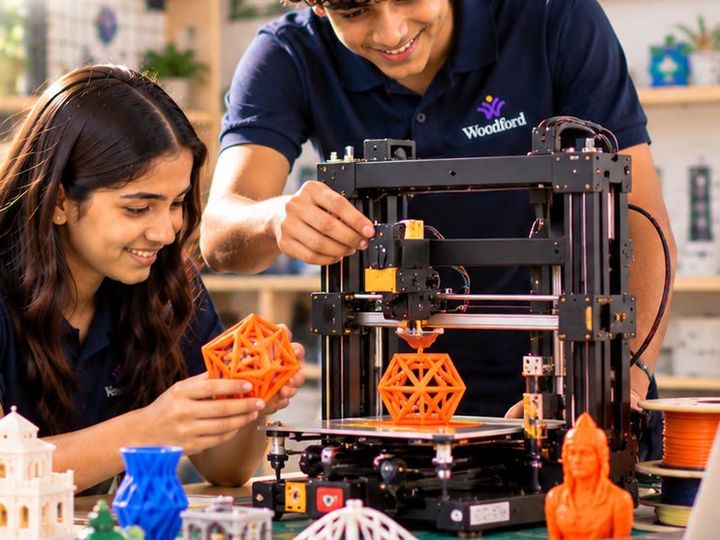
Children model their ideas on screen and print them, from a nameplate in Grade 1 to working prototypes by Grade 5.

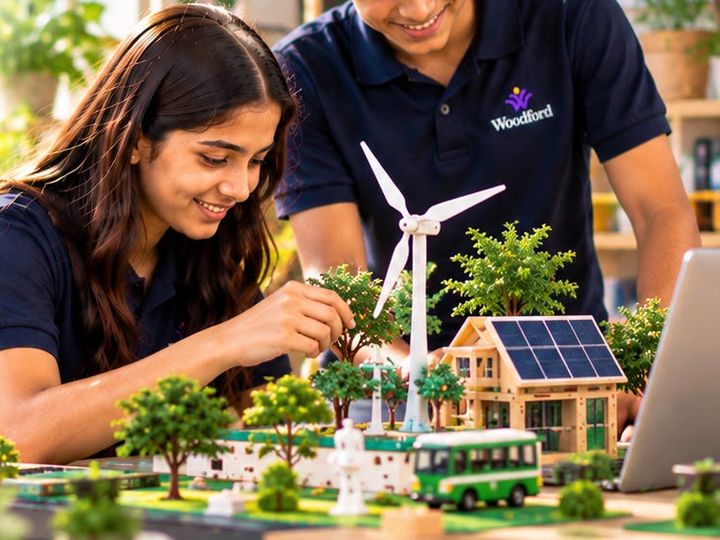
Model wind turbines, solar houses and smart eco-villages, where technology meets care for the planet.
Real science, outdoors and hands-on.

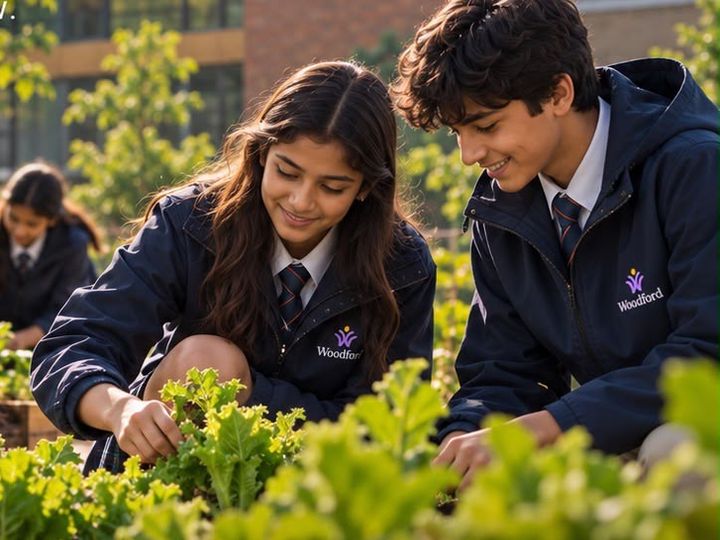
The school garden is a science lab, a maths lesson and a place to work together. Children plant, measure, observe and harvest across the seasons.

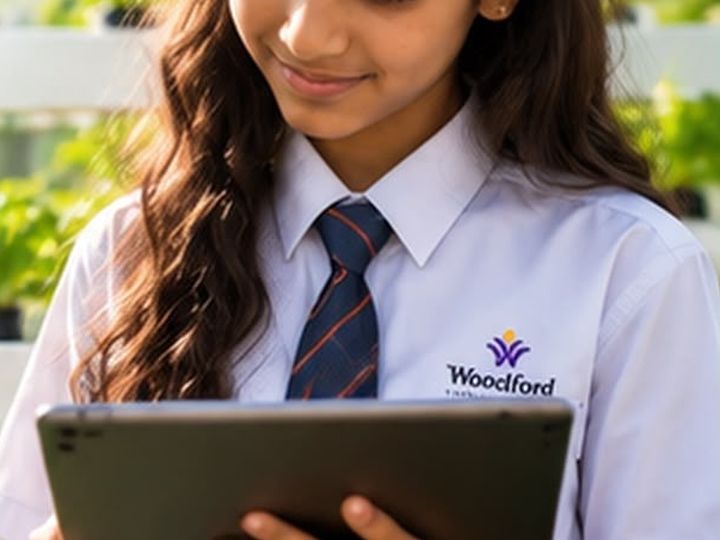
Children use simple sensors and tablets to track pH, temperature, light and plant growth, and learn how technology can help farming.

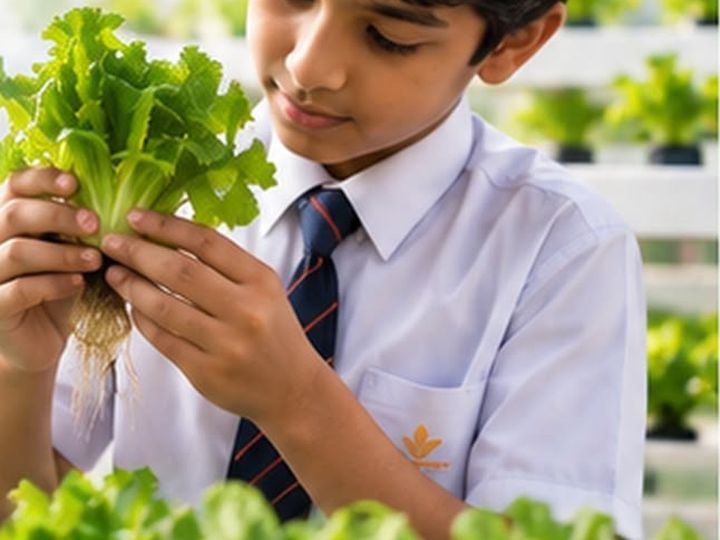
Growing food without soil, using less water. Children run their own hydroponic beds and taste what they grow.
Rooted in India, open to the world.

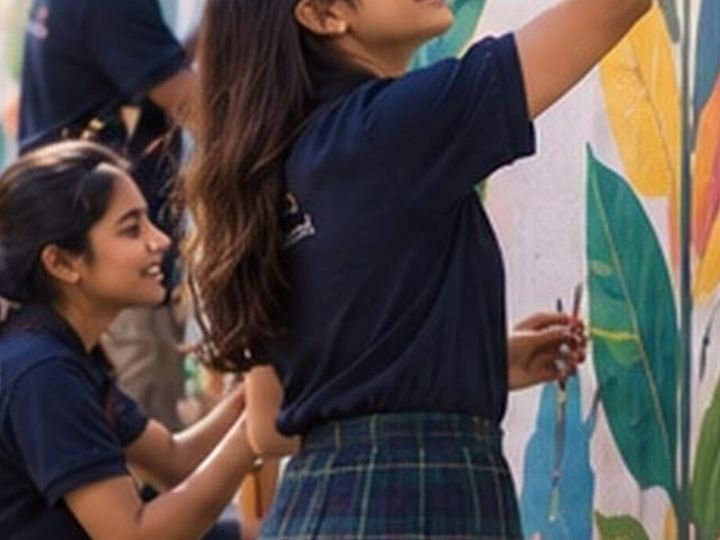
Children plan and paint large murals together, learning composition, colour and how to share one creative vision.

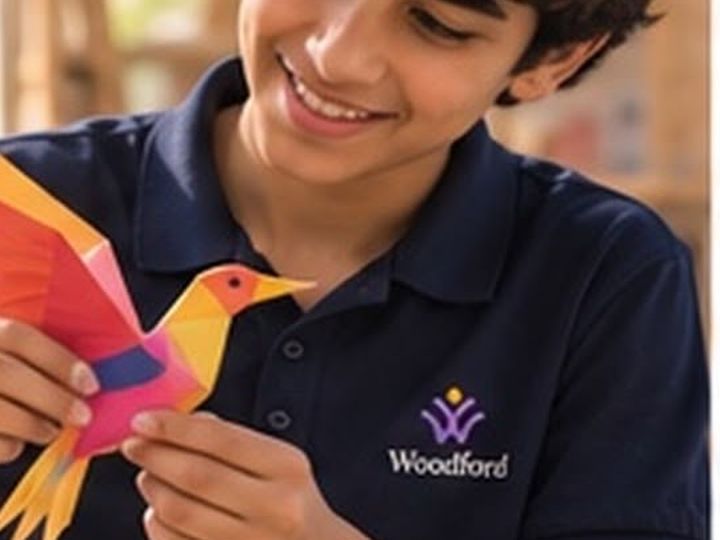
Madhubani, Warli and other folk styles sit alongside origami and paper sculpture, connecting tradition with contemporary design.

Gujarat's living textile crafts, learnt by doing: block printing, tie and dye, weaving and embroidery.

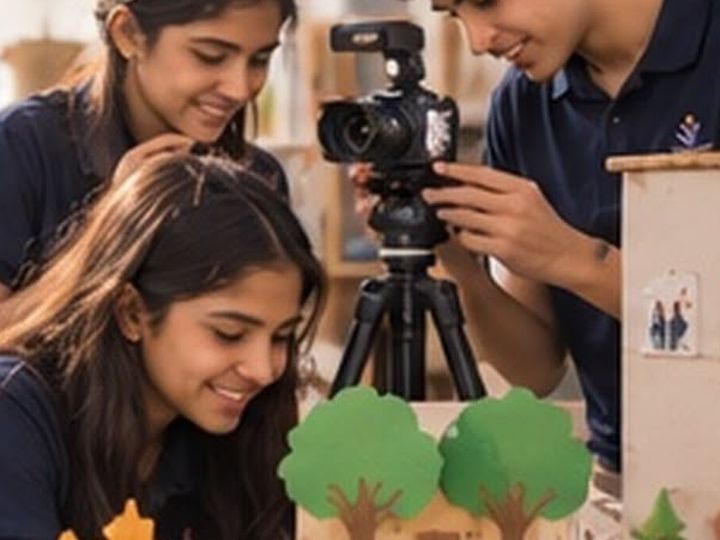
Drama builds confidence on stage, while photography, stop-motion animation and set design bring children's stories to life on screen.
Photos are from our 2027–28 programme campaign. Equipment and activities are adapted to each age group. See the gallery · Our focus on life skills
School runs from 8:30 am to around 3 pm. Learning comes in focused blocks, each followed by a chance to move, play or be outdoors.
A sample day for a primary class. Timings and order vary by grade and day of the week.
A record of each child's best work, projects and reflections, built up over the year.
Teachers track progress against clear learning goals and adjust support as they go.
Regular meetings to share how your child is doing and what comes next, in plain language.
Yes. Woodford International School is recognised by the Government of Gujarat for Std 1–8, English medium.
In the primary years we follow an internationally benchmarked framework, adapted the Finnish way. Our board pathway for the senior grades will be shared with families as it is confirmed. Ask us about it on your campus visit.
No. Play and projects are how we teach the core skills, not a replacement for them. Literacy and numeracy get dedicated time every day, and progress is tracked closely.
Homework is light and purposeful: daily reading, plus short tasks that connect to class. We'd rather children have time to read, play and rest at home.
The signature programmes are part of the school week for every child. Optional activities such as after-school clubs are offered separately.
Children move from Toddler's Block into Grade 1 on the same campus, with the same philosophy. Talk to us about the transition when you visit.
The best way to understand Woodford is a morning on campus. Book a visit and bring your child along.